Issue 3 of our newsletter Industrial Unionist is out now!
Read for local analysis, organising unemployed workers, NZPFU update, the Italian General strike, AI and more!
Read the full article in the news section or download the pdf by clicking below.
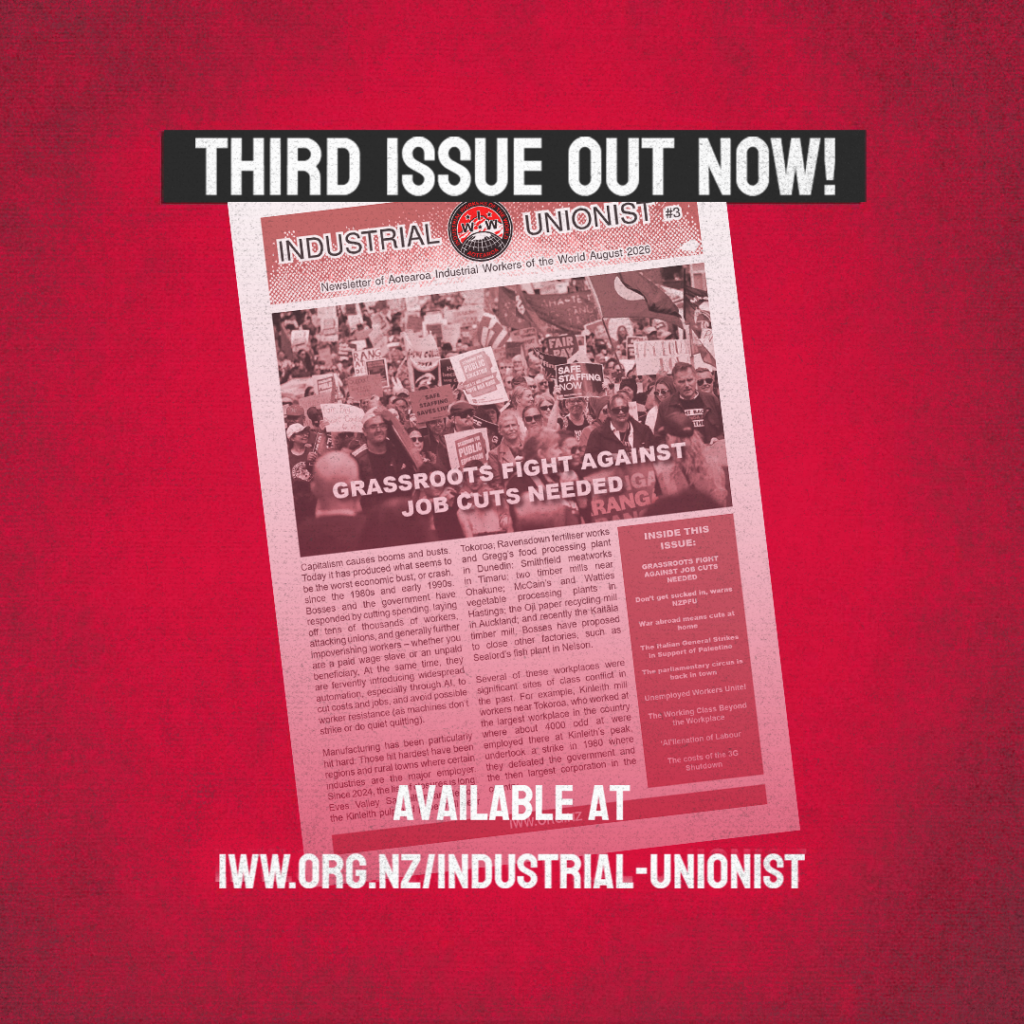


Issue 3 of our newsletter Industrial Unionist is out now!
Read for local analysis, organising unemployed workers, NZPFU update, the Italian General strike, AI and more!
Read the full article in the news section or download the pdf by clicking below.
Capitalism causes booms and busts. Today it has produced what seems to be the worst economic bust, or crash, since the 1980s and early 1990s. Bosses and the government have responded by cutting spending, laying off tens of thousands of workers, attacking unions, and generally further impoverishing workers – whether you are a paid wage slave or an unpaid beneficiary. At the same time, they are fervently introducing widespread automation, especially through AI, to cut costs and jobs, and avoid possible worker resistance (as machines don’t strike or do quiet quitting).
Manufacturing has been particularly hit hard. Those hit hardest have been regions and rural towns where certain industries are the major employer. Since 2024, the list of closures is long: Eves Valley Sawmill near Nelson; the Kinleith pulp and paper mill near Tokoroa; Ravensdown fertiliser works and Gregg’s food processing plant in Dunedin; Smithfield meatworks in Timaru; two timber mills near Ohakune; McCain’s and Watties vegetable processing plants in Hastings; the Oji paper recycling mill in Auckland; and recently the Kaitāia timber mill. Bosses have proposed to close other factories, such as Sealord’s fish plant in Nelson.
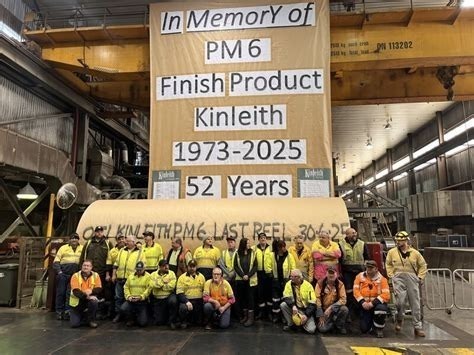
Several of these workplaces were significant sites of class conflict in the past. For example, Kinleith mill workers near Tokoroa, who worked at the largest workplace in the country where about 4000 odd at were employed there at Kinleith’s peak, undertook a strike in 1980 where they defeated the government and the then largest corporation in the country.
How do we respond to these threats? Job cuts are difficult to respond to. Unions are less strong today than they were in the 1980s – indeed, manufacturing has largely been de-unionised since then.
But surely we can do better than at present. I think the response from unions today has been weak and easily swept aside. While unions have organised the odd protest and public meeting against layoffs and closures, and produced some bad publicity for bosses, many offer little resistance. Mostly unions just seem to seek to delay cuts through legal means by claiming that bosses have not followed the proper restructuring process.
For instance, a Public Service Association (PSA) leaflet called ‘When your job is at risk: A PSA guide to change management’ just advises workers who might lose their livelihoods to make sure managers follow the correct ‘change management’ process when proposing layoffs, and then write a collective submission during the consultation process to object to the cuts! It just comes across like they are managing or supervising the cuts, and their real strategy is to retreat rather than fight.
Submissions are not going to stop mass sackings. I’d argue that the PSA’s lack of real opposition to slashing about 10,000 government workers’ jobs in the last few years has emboldened the current Tory government to promise 10,000 more public sector job cuts if reelected in the future.
Job cuts can be opposed. They have been successfully opposed here and abroad many times. Direct action is needed to fight for every job, such as through protests, occupations, pickets, strikes, and other forms of collective refusal that actually hurt bosses. Workers and unions need to be brave and willing to fight for their jobs and others’ jobs. What is needed is genuine and lengthy grassroots and flaxroots campaigns between unions and community groups to stop cuts and the massive damage they do to workers, whānau, and communities alike.
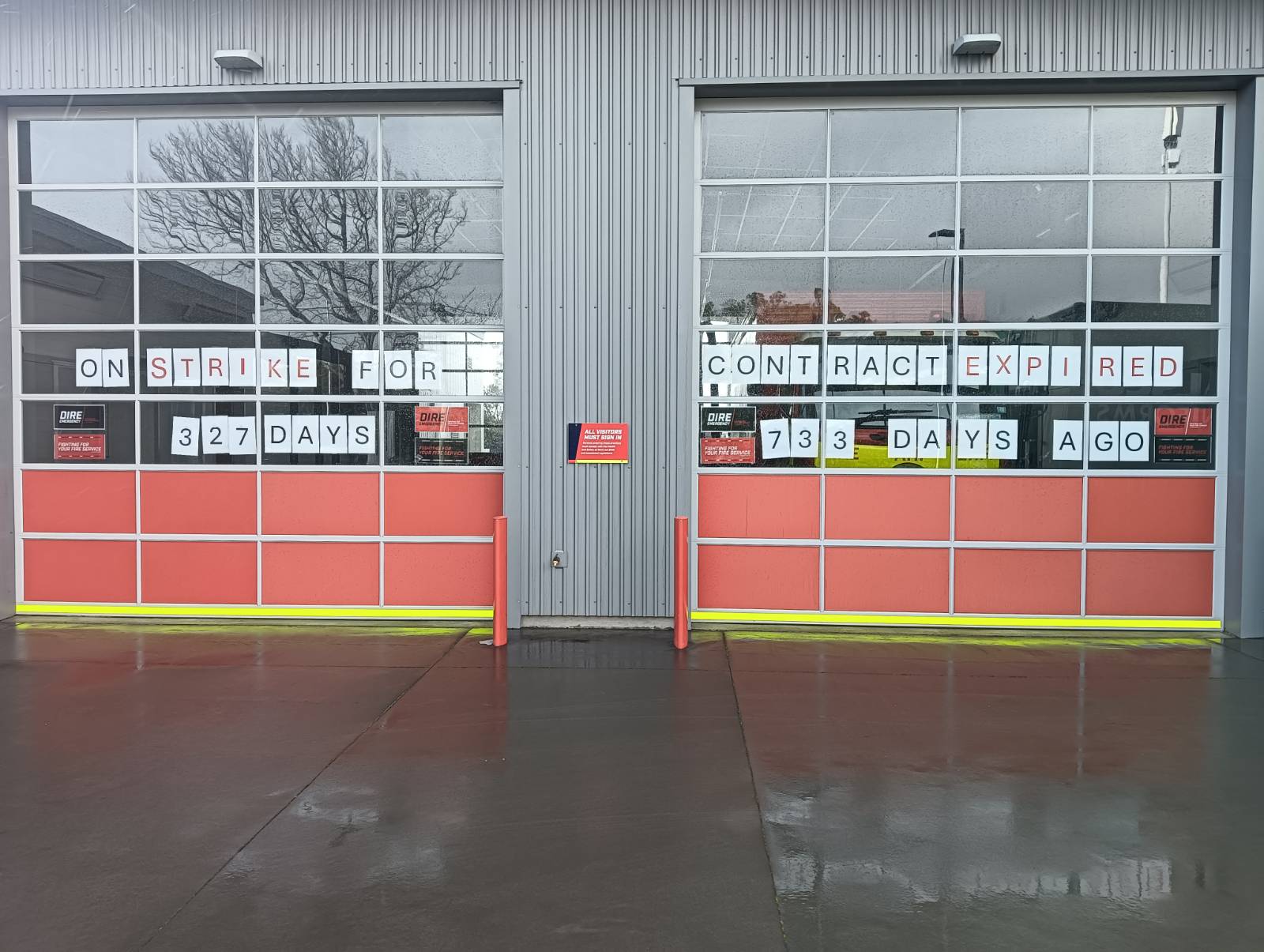
For over 300 days the Firefighters have been engaged in 50 one hour strikes, and counting. New Zealand Professional Firefighters Union (NZPFU) have been striking over conditions, broken equipment, and a Collective Employment agreement that expired over 755 days ago. In the midst of government slashing public funds while favouring giving money to their rich buddies, we must pay close attention to the meaning of these strikes. These strikes are important as it not only entails defunding essential community services but also demonstrates one of the most visible ways in which the working class has been continuously attacked for over decades. What we see are the consequences of decreasing workers’ rights and their involvement in managing their workplaces.
As Fire and Emergency New Zealand (FENZ) ought to be focused on getting back to the bargaining table, they continue to be mischievous instead, undermining NZPFU’s concerns. Under the guise of appearing to be a helpful employer, FENZ are pushing for Eke Taumata which states that “Fire and Emergency’s goal is to be a place where people feel they belong, and supported and empowered to thrive, so we can better serve our communities and each other. We believe people thrive and feel they belong in an environment that is safe, positive, and inclusive.”
As pointed out by NZPFU, this is another tool of the employer to avoid being accountable by refusing to engage with the union and its demands directly. The correct response is to increase staff as that would address many of the highlighted issues that Eke Taumata supposedly tackles. This is a deflection strategy used by FENZ to appear as if they are taking due action but do not be fooled!
All members of NZPFU who are participating in this have been asked by the union to cease participation as doing otherwise would be to fall for their trap and could be seen as NZPFU welcoming this response. The answer for FENZ, like all employers putting profit above anything else, is to cut jobs or, as they love to call it, “restructuring”. In reality, this means those on top getting more money while the already appalling state of emergency response units gets even worse.
It is imperative we continue to stand together with our firefighters. As their recruit courses are axed, their equipment keeps failing and FENZ goes on without listening to the important demands they bring in general, they will continue to be exposed to unnecessary risks that no one should be putting up with. FENZ is even losing support from their right wing coalition government mates.
Now, more than ever, we need an escalation of tactics to win our demands. The NZPFU’s bravery in taking prolonged strike action is a great step in the right direction. If we leave it to the bosses, they will continue to put profit over everything the same way our government keeps doing the same with their own policies. An injury to one is an injury to all, we need to stand together if we want the injuries to stop!
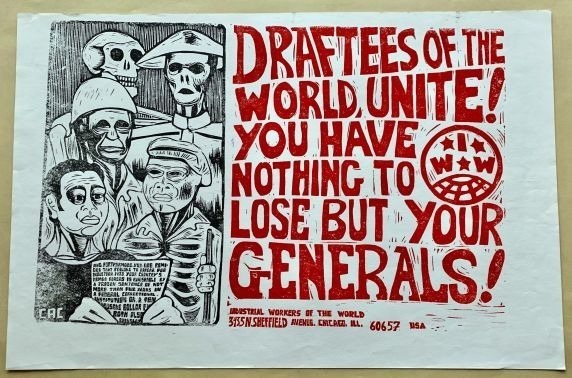
Here we go again. The US has restarted its war on Iran (as of mid July). For capitalism, war is big business and it means big profits for the arms industry. For states like US and Israel, it means war for oil and imperialist and racist control. For workers, it means the cost of living shoots up as inflation soars while governments cut back on social spending to pay for increased military spending.
Indeed, one of the biggest booms for capitalism today is the growth of the arms industry. With the rise of the far right authoritarian regimes globally, and the economic and climate crises, there has been a flare-up in horrific wars in Africa, Europe, and the Middle-East, including genocide in Gaza, as governments grasp for limited resources like land and oil.
We are not immune here. The New Zealand government, while not joining any war (although Prime Minister Luxon, a Christian fundamentalist, wanted to join the first US-Israeli war on Iran), has also joined the global arms race.
That government has massively boosted military spending by $9 billion of new spending over four years from 2025. It’s about the only area of spending which it has genuinely increased, apart from splashing out on prisons.
To fund that increase, the government has massively cut, or plans to cut, spending elsewhere – by somewhere around $7 billion in conservative estimates or $20 billion more liberally. This includes budget cuts, pay equity cuts of 2.7 billion per year, firing 10,000 workers, cutting various services (including to the disabled, temporary support for beneficiaries, and the unemployed benefit for most 18-19 year olds), and cancelling various projects.
The old chestnut that war abroad means austerity at home is yet again proved.
Opposing austerity cuts and war requires opposing capitalism in the end. We need not just a strong grassroots anti-war movement like the free Palestine movement, but also to organise workers against war. This needs to occur both inside the companies that directly profit from war, and outside them, such as the transport workers who transport key goods globally. Companies like Aotearoa’s own Rocket Lab, as well as Palantir and Elon Musk’s SpaceX have pocketed billions profiteering from technology which can be, and has, been used for military purposes.
If we cannot organise effectively, we might be facing an era of even harsher wars as the capitalist crisis deepens and we move into a brave new destructive world.
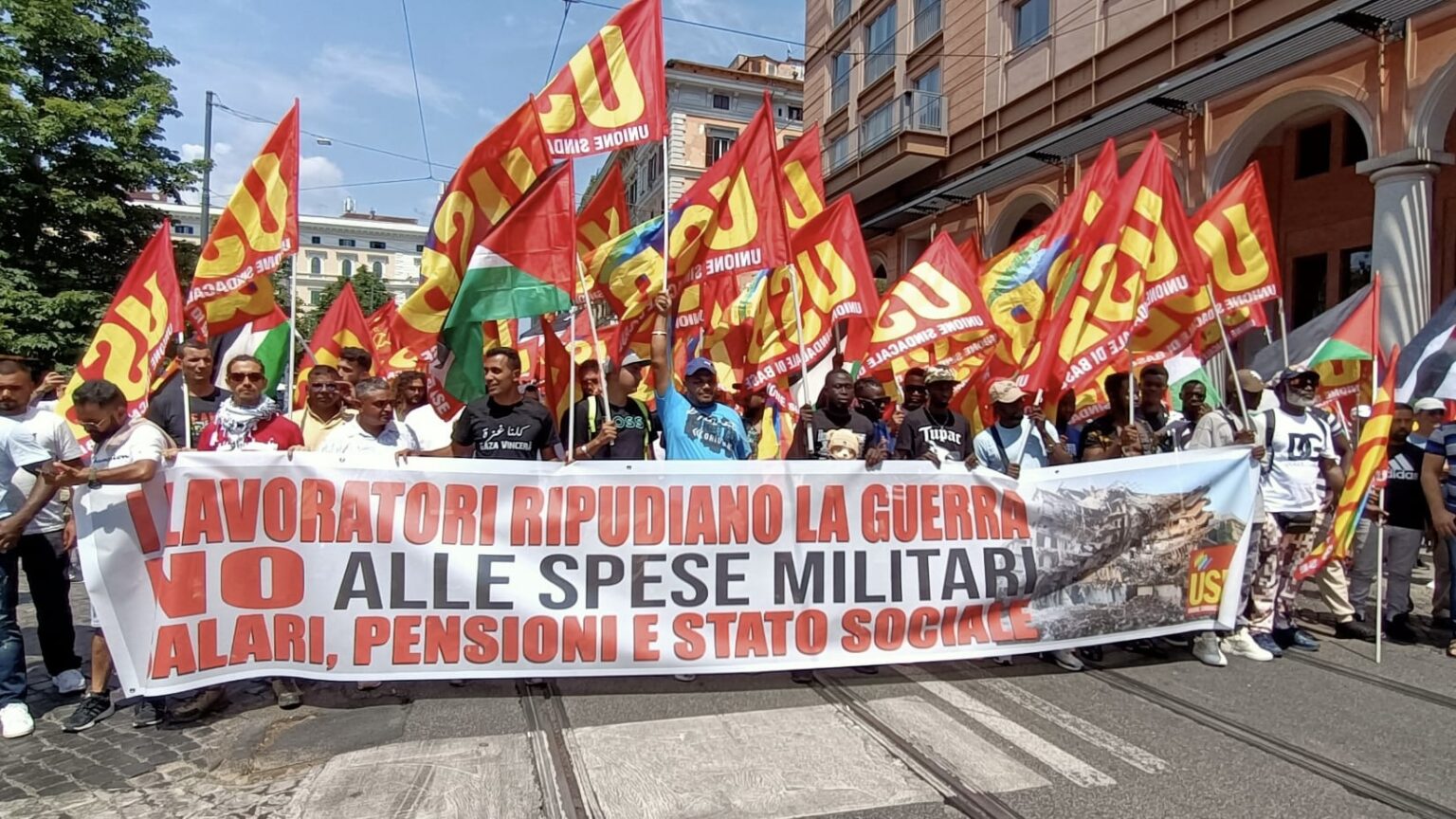
Over the last year Italian workers have been engaging in large scale resistance to the Italian government’s complicity in the Israeli war and genocide, as well as the subsequent internal austerity and crackdowns experienced in Italy. The strikes have been huge and defined by their overtly political character, unlike previous stoppages.
Crucially, on September 22nd 2025 workers, students and ordinary people embarked on a historic general strike in support of Palestine and to end their own governments complicity in the genocide. Led by several grassroots unions, including the Unione Sindacale di Base (USB), CUB, SGB, ADL, Varese and USI-CIT, these strikes were the biggest in the country’s history, and helped spur on mass protest and continued action into 2026, where another general strike occurred in May.
Under the slogan “Blocchiamo Tutto” (“Let’s Block Everything”) the unions, led by dock workers at ports such as Genoa, Livorno and La Spezia, refused to unload cargo meant for Israel, went on strike. General strikes against the government’s austerity and war budget followed on November 28-29th and on December 12th. On May 18, 2026, rank-and-file unions called for a further general strike against war and austerity under the slogan “Not even a nail for wars and genocide”. Other significant protest actions occurred during this time, including one million people marching in Rome on October 4th 2025.
Despite anti-strike laws and a harsh crackdown the ‘base’ unions, as they are known, as well as a strong protest and student movement, have mounted a serious threat to the current far right Italian government led by Georgia Meloni. The government have been pressured to start modifying their position on Israel in the face of such strong resistance. The battle is still ongoing and the strength of the movement is being tested with some moderate unions withdrawing support, while others are joining in.
The general strikes, protests and blockades have pointed out the connection between the war industry profiting off rising military expenditure at a time where the wages are failing for ordinary Italians and public services are being cut and austerity is the dominant economic plan. People are shocked at the genocide in Palestine, and through these strikes are able to fight both to stop the genocide but to fight the internal repercussions within their own country. A link that has not been made here in Aotearoa as effectively.
A key tactic has been shutting down logistics and distribution networks, such as ports, shipping, transportation, as well as motorways and rail networks. New calls for a national aviation strikes as well as other delivery services and public servant strike have been made in recently expanding this strategy. This has been the corner stone of the pressure the moment has been able to mount.
The wave of strikes in Aotearoa in 2025, has shown, that without a systematic campaign of stoppages, and without a strategy to shut down key part of the economy, our demands cannot be won. We should take inspiration from the grass roots mobilisations of unions such as the USB; syndicalists who have a plan to fight and to win, not liberal unions who want to manage and uphold their position within the current system.
2026 is a crucial year for this Italian strike wave and we are watching keenly!

Many think the 2026 Aotearoa election is a chance to throw out the most right-wing government we have had since the early 1990s. The deeply pro-business National-ACT-NZ First coalition government has been brutal to workers and unions. Life has got tougher and tougher. Wages or benefits don’t keep up with rising prices. The OECD has estimated real wages have been cut by 6.4% since 2021. This is the worst of any OECD country. Tens of thousands have lost their jobs. The government has deepened the recession by massive cuts to government spending.
The government has also introduced a slew of anti-union and anti-worker legislation by repealing pay equity, cutting health and safety requirements, enabling bosses to deduct full pay during a partial strike like a go-slow, enabling bosses to fire at will new workers within 90 days, reducing sick leave for part-time workers, attempted to stop the bogus ‘self-employed’ like Uber drivers from being classified as workers, and more. It has also attacked Māori, transgender people, and more.
Their overall strategy has been to place the main burden of the current crisis in capitalism on workers, while freeing up business. The government has done everything requested of it from capitalists to cut red tape on business – by slashing ‘protections’ for workers, environmental protections, allowing fast track development, and cutting regulations through the Regulatory Standards Act.
Under right-wing neoliberal theory cuts should produce growth and jobs. Of course it has not. Everybody, following the government’s lead, is cutting costs as the slump deepens. We are in a major economic crisis the likes we haven’t seen since the early 1990s with falling profits, the bursting of the speculative housing market bubble, and stagflation (inflation plus low growth).
So we should vote Labour or Greens, right? They won’t be much better. The Labour Party remains a party run by lawyers and technocrats that is mainly for well-paid white-collar workers. It remains committed to managing neoliberal capitalism: having a small government with little debt that does not scare business, except with a few of its rough edges taken away with things like free medicine prescriptions and public transport subsidies.
The Greens are not much better – they just want a green, electrified capitalism and a weak updated version of old fashioned social democracy with a bit more attention played to the environment, Māori, poverty, inequality and unions, while leaving the structures of power largely untouched. They lack enough support to even enact those policies. Both parties want a respectable, professionalised party that works within the capitalist parliament, and neither party genuinely want power for the working-class.
Most unions in Aotearoa remain tied to the Labour Party. Despite unions these days claiming to be ‘organising’ and ‘campaigning’ unions, their main strategy is actually to lobby Labour politicians for law changes that mainly benefit union bureaucracies, or to campaign to vote for Labour in election year like now. This is disempowering. It is genuine grassroots and flaxroots union organising and agitation, based on direct action, that quickly gets wins against bosses, and builds up confidence and leads to grassroots and flaxroots change.
We are currently in a major capitalist crisis globally, as evident in wars, the cost of living crisis, AI threatening even more unemployment, and deepening class and racist inequalities. There is a climate crisis too, leading to damaging weather, mass migration, and further inequality. As the system is becoming more unstable as it is simply not working for the vast majority.
Yet all elections and political parties offer is technocratic tinkering with the status quo.
To deal with these multiple crises, we need radical, systemic change. Not a few reforms. Loans for rooftop solar panels won’t avert the climate crisis nor the cost of living crisis. The parliamentary system, or political parties seeking government power, will never really address these crises because power does not fundamentally lie in the government.
Power largely lies in capital – especially in the wealth created by millions of wage slaves and unwaged slaves toiling away in workplaces, communities, and homes. The entire system needs to be changed based on workers collectively owning, controlling, and distributing wealth according to need within environmental limits.
What capitalism fears the most is not electing a ‘left-wing’ Labour-Greens-Te Pāti Māori government, but widespread, effective, and coordinated workers’ resistance at work. Without our toil, capitalism would stop. That’s one major reason why the IWW promotes direct action by workers, rather than supporting the indirect action of electing parliamentary representatives who can do little to change a system which is largely built against workers.
Unemployment is skyrocketing and promises about fixing it have done fuck all. Job shortages continues to intensify and the cracking down of those receiving WINZ payments carries on despite virtually no change within the job market. Most jobs are easily getting over 500 applications within a couple of days and even if you’re among the first ones applying the chances you get a reply from prospective employers is minimal.
Consequently, those on the benefit get scapegoated as well as having immense pressure placed on them for having to deal with barely surviving on the income given by WINZ as prices continue to steadily climb, obligations get even stricter and the job market looks just as bad, if not worse. My girlfriend was recently a victim of WINZ as they took away her Job Seeker Benefit due to my own earnings in a job that was deemed “above the threshold” income-wise and the ridiculous concept that a single income (no matter how meager and without accounting rising expenses) counts for two people in a relationship. We both depended on that money and it just taken away like it was nothing and left us struggle even though they knew that my girlfriend had a medical certificate confirming she was not capable of working due to anxiety. They did not care about that at all and it took a lot of work to find something suitable for her to work on, and WINZ was not supportive in the process.
For reasons like these, and more, organising unemployed workers is important. Restrictions against gaining benefits are more harmful than it is of use to “budget keeping” as it works to scapegoat those on WINZ payments when they are already suffering as it is. They are also classist, sexist and extremely ableist requirements and obligations that does next to nothing at addressing genuine concerns, conditions and circumstances that any given group of individuals might be going through, especially in these times. Since unemployment is a phenomena that is fabricated rather than one made by the people belonging in the category, it is imperative to push back against the stigmatising rhetoric that seems to persist about people that are in any sort of governmental assistance.
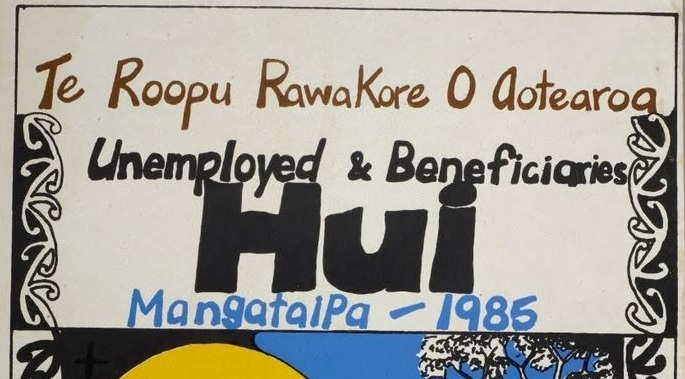
Advocacy models are limited and it is our job as workers to represent ourselves, we know best what we’re struggling with, not case managers sitting in their air conditioned offices. In the past, there used to be Unemployed Unions, like Te Roopu Rawakore o Aotearoa (Unemployed and Beneficiaries Movement of New Zealand), who were a national unemployed and beneficiaries’ movement organised largely by women, Māori, and young people during the 1980s recession. I believe these circumstances demand for the unemployed, beneficiaries and workers alike to organise unions like Te Roopu Rawakore o Aotearoa. The unemployed, beneficiaries as well as the immigrants are our comrades-in-arms, not are enemies, and what harms them also harms us alike, contrary to popular beliefs and lies usually spread!
The conditions surrounding the emergence of these Unemployed and Beneficiaries Unions and other forms of collectives are indicative of trends similar to those faced now, such as high unemployment, widening gaps on income versus rising living costs, the scapegoating of both the unemployed and of immigrants and racial tensions as Te Tiriti continues to be undermined in favour of even more divisive policies that are also economically harmful to us as the rich keep getting richer.
Unemployed workers need to organise themselves just like all workers must!
There have been many conversations surrounding AI and labour. Employers, especially those who own AI models, may frame them as an alternative to human labour, reducing the need to hire employees. Some companies promise an end to hiring humans entirely in the future. Analysis of how AI produces content suggests it may not be as independent of human labour as the marketing suggests.
AI reproduces patterns taken from the work of real people. This is why it succeeds at converting photos into certain art styles or writing cover letters. These tasks tend to follow observed patterns or even specific templates in the case of the latter.
Strict patterns help remove some of the guesswork, but they never entirely remove it, since Large Language models (LLMs) observe patterns in formatting and language instead of the actual methods that would be used to obtain the answer by a human or a purpose-built algorithm.
Some examples of this include the failure in some instances to count the number of letters in a word or perform other basic arithmetic tasks that a beginner writing a few lines of code could solve easily. In order to verify or improve output, these models require human data and human labour.
Building and maintaining an LLM requires training data. Training data can be sold directly from social media sites to the company in charge of the LLM (if they aren’t owned by the same company already), scraped by crawlers, or even volunteered by users using chat bots. The collection of data serves both to contribute to the pool of information available for the model to repurpose and to build a comprehensive user profile of what it can use to entice the user to keep using it.
The chat bots in particular will emulate emotional intimacy to encourage users to provide more detailed information about themselves. This can include medical information, sexuality, contact details etc. This allows the model to improve it’s methods of extracting money and information from the user and from advertisers who want the model to promote its product.
The repurposed content, from social media and elsewhere, is divorced from any previous contributors or context and fed to users as original content. This is particularly evident in cases where someone has asked for a source of a claim and received a “hallucination”. It takes work that humans have produced, or their bodies, and produces something in its shape without understanding the output.
Additionally, this data can be used to surveil users when sold to governments and employers. The data can be used to monitor for particular opinions or behaviours, tying those to more public identifiers.
In this way LLMs harvest and alienate internet users from their labour and from each other. Users are charged for the privilege of receiving information and work provided by other users for free.
Human labour is just as crucial a commodity for LLMs, on every layer of operation. From the physical layer of materials and infrastructure to the information layer of moderation and analysis.
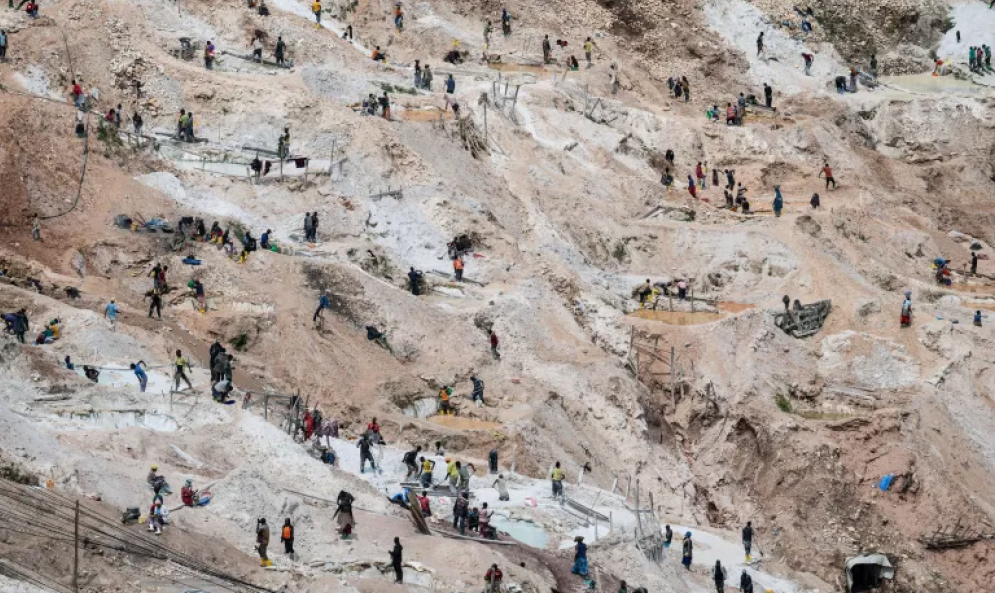
On the layer of physical infrastructure, LLMs rely on land, energy and manufacturing. The mineral extraction in places such as DR Congo, where Western funded militias drive people into desperate poverty in order to gain cheap materials for processors and chips. This is continuation of western capitalist powers taking both labour and land and using one to reinforce the other.
The information layer relies on both knowing and unknowing labour. The knowing labour includes content moderation and data labelling. These jobs, while not necessarily as physically exploitative as mining or construction, frequently require long hours for low pay, low job security and at a psychological cost to the labourer. This can include being subjected to images and videos featuring real graphic violence and CSAM, particularly in the case of content moderation. This work, like maintaining the physical infrastructure, is typically done by people in the imperial periphery, which is what allows the owners of AI models to extract so much while paying so little.
The unknowing labour is collected more indirectly. Internet users have, without informed consent, been training data for AI as well. ReCAPTCHA, the test implemented on many websites to “check that you’re not a robot”, was sold to Google for AI training. Millions of users were forced to contribute training data so that AI models could parse strange looking text and identify objects.
Websites with targeted algorithms like Spotify or Tinder frequently sell data to third parties. Previously for use by targeted advertisers, now also used for training AI models, if those models don’t manage the algorithms directly. Information about shopping habits, conversations between users or even users voice data, is made accessible to these models.
The analysis and pattern recognition is divorced from the labourers performing it. It is sliced up and profited from by the capitalists who own the models, while the model would not function without human labour.
The exploitation described above is not unique to AI. The abuses of privacy or workers were features of a system dependent on the internet prior to AI. AI models have made an already extractive system more extractive.
A technology dependent on human labour is vulnerable to human organising. This will involve organising the tech workers, physical and data labourers, as well as finding and building alternatives to the technologies required in our daily lives. Currently the tech industry in Aotearoa is largely deunionised. To address this, a campaign of unionisation by tech workers and a broader intersectional struggle is required.
The working class is much bigger than just people with paid jobs. It also includes parents doing unpaid care-giving, people with disabilities, seniors, people receiving benefits, those working less than they want to, and workers in insecure or unstable jobs. Many of these groups don’t get the protections that many workers fight for, like steady income, benefits, overtime pay, paid time off, and job security. People with permanent or total disabilities, or those unable to work full-time, often have to navigate complex systems that judge their worth based on how much money they produce, instead of recognizing their humanity. As those who rely on benefits and other marginalized groups face attacks from the current government, we need to ask ourselves if we’re doing enough to stand up for the most vulnerable among us.
For too long, people on benefits, disabled individuals, and those outside traditional jobs have been unfairly labeled as lazy, unproductive, or a drain on society. These harmful stereotypes distract us from recognizing the deeper problems caused by an economy that has prioritized free markets, austerity, and profits over the needs and dignity of people. We must not fall into the trap of fighting each other. Someone struggling to get by on benefits, someone unable to work due to illness or injury, and someone stuck in insecure jobs are our allies, not our enemies. A missed paycheck, a serious illness, or a family emergency can cause hardship for nearly anyone. The way society dehumanizes those who don’t work or do unpaid work comes from the same flawed system that reduces everyone to how much they can produce or earn, instead of valuing their worth as people.
The IWW understands that fighting for workers isn’t just about factory workers, office employees, or specific workplaces. While many unions focus on particular industries or jobs, the IWW aims to organize the entire working class, including those whose work isn’t paid, is undervalued, or is left out of traditional employment. An economy driven by markets, resource extraction, and profits for shareholders measures people by what they can produce, rather than by their needs, skills, or dignity. When welfare systems are separated from the broader fight for workers’ rights, those who depend on these supports are left vulnerable to cuts, privatization, and austerity measures. Through solidarity, organization, and collective action, workers can build the power to defend each other not just at work, but in our communities as well.
There is no workers’ rights without the inclusion of parents doing unpaid labour, people with disabilities, seniors, people on the benefit, those with reduced hours and workers in insecure or unstable jobs. Today it is them, tomorrow it will be you. The sooner we understand this the better it will be for all of us. We must unite and work together and not let the ruling class divide us. Be the helping fellow who stands for every person’s intrinsic value rather than their perceived value as an object!

Earlier this year, the Telcos coordinated to shut down their 2G and 3G networks at the same time. Whilst this may seem like relatively minor news to those of us who regularly “upgrade” their phones every 1-3 years, to many Kiwis who can’t afford to do so, however, this is an absolute disaster that has left them vulnerable, completely unable to contact emergency services on their own mobile devices. This especially affects lower-income parents who are already feeling the squeeze after the government effectively banned young adults aged 18 and 19 from accessing critical job seeker benefits.
New Zealand’s 2G and 3G networks enabled parents to buy very old phones for very low prices for their children. These phones allowed parents to stay in contact with their children and enabled their children to contact emergency services when away from their parents. Now with the shut down, many of these phones are no longer fit for this purpose and will be making their way to the bin. Leaving parents having to decide to buy more expensive 4G compatible phones or simply go without the capability to contact their children when separated.
Remember that this doesn’t just affect 3G only phones, this affects plenty of older 4G phones that don’t support 4G calling as some phone manufacturers did not implement the standard until much later on, especially on midrange and budget phones like the Nokia Lumia 830 (pictured). In many other countries where 3G had been shutdown, the 2G network had been left operating due to the very real concern that someone may be unable to contact emergency services on an older device. This is another example of the planned obsolescence that makes perfectly capable devices into laggy, unusable e-waste. Which is central to capitalism, driving shareholder value at the expense of increasing our living costs as we unnecessarily replace our devices.
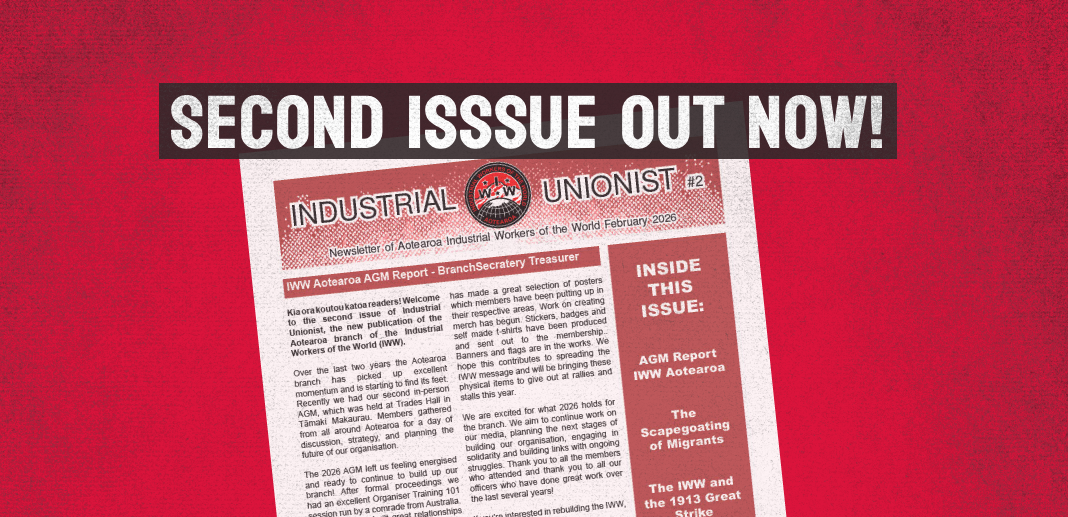

Issue 2 of our newsletter Industrial Unionist is out now!
Read for migrant worker perspectives, a look at the 1913 great strike and our involvement, and updates on NZPFU strike action.
Join today! Email: delegate@iww.org.nz
We need your help in building our organisation, so we can help rebuild radical grassroots unionism here in Aotearoa. Please reach out to a delegate today or message us on social media with any questions!
The IWW is back in Aotearoa for the first time in decades to unite workers in solidarity! Join us to help us rebuild as a strong foundation for transformative labour activism in Aotearoa today. An injury to one is an injury to all!
If you are interested in joining please contact us through our website or email a delegate at delegate@iww.org.nz.
https://www.iww.org.nz